
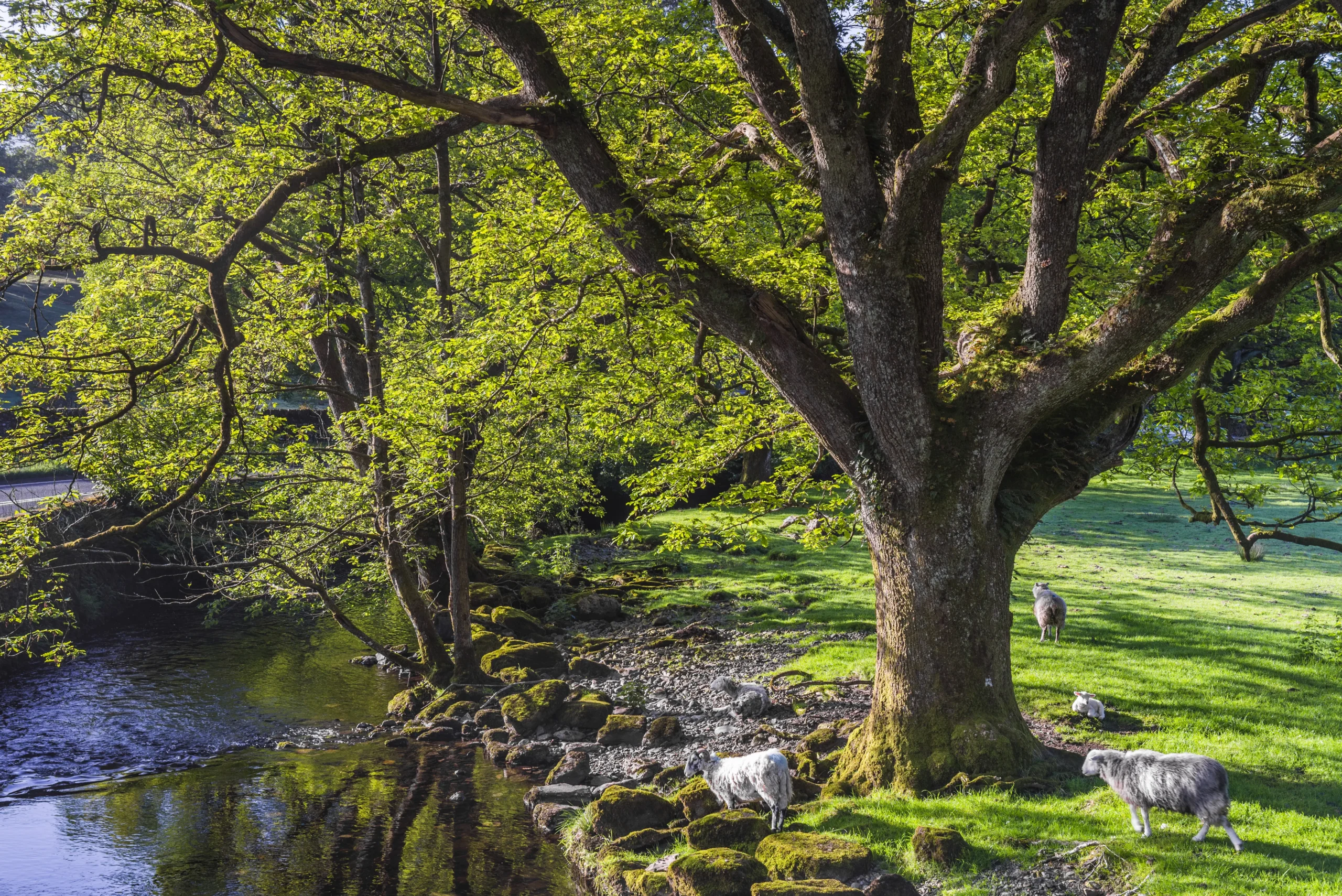
Tree Preservation Orders (TPOs) have been with us since the Town and Country Planning Act 1947. They protect trees when the local planning authority (usually a specialist officer) considers that they contribute to the enjoyment of the local setting. Like many things in life, there are some facts and some fiction about how TPOs work, and your rights.
Any tree can be subject to a TPO. This may surprise some. A conifer hedge can be protected. Similarly, trees are not protected due to their species. One false belief is that all oak trees are protected; they are not. Some are, many are not. Another false belief is that a protected tree cannot be touched. A protected tree cannot be pruned or felled without the consent of the local planning authority. This is a restriction for the property owner, one which many would wish they did not face.
A tree that is dead, dying or unsafe can be felled without the need for formal consent. This can lead to some tree owners suggesting that they could fell a protected tree and then argue that it was unsafe. This is an area where it is wise to seek the opinion of an experienced Arboricultural consultant. The burden of proof is on the tree owner to prove that a tree was dead, dying or unsafe. It is also an area where the verbal opinion of a ‘tree surgeon’ may not be sufficient. The tree consultant will be experienced in the area of tree safety and protocol and can help the tree owner to navigate the minefield of law, rights and protocol.
For example, the presence of decay per se does not automatically make a tree unsafe. The specialist tree consultant will be able to identify the source of the decay, caused usually by one or more species of fungi. A technical report which explains the situation, identifies the fungus and the implications, is likely to be far more effective that trying to plead the case to the disbelieving tree officer.
If you think your tree is unsafe, then apply to the local planning authority for permission to fell. I’ll explore the process shortly. However, if a tree is really dangerous, it can be felled without the need for formal consent, by issuing a 5 Day Notice to the local planning authority.
One well-meaning but misguided operator I know wanted to fell a protected tree and considered it to be so unsafe that the 5 Day Notice was appropriate. However, his own schedule was such that he was unable to action the work for 10 weeks. The officer took a rather dim view of the situation. If the tree was so dangerous, he expected the works to take priority. Working with an experienced tree consultant, a solution was identified that didn’t result in felling; the tree was pruned, with the unsafe branches being removed.
When you want to prune a tree subject to a TPO, you need to get permission to do this. There is an application form to complete, either on-line or in paper form. This provides details of the tree, where it is, who owns it, what work is requested and why, and a request for clarification; is the applicant related to anyone working for the local authority. There is an expectation that the application will be accompanied by a site plan. The application is then submitted to the local authority, which has eight weeks to determine it. They can decide to approve the work, in full or in part, or to refuse it. If they refuse it, they need to give reasons.
Common problems associated with applications include vague details of the proposal, including ‘prune’, ‘crown’, ‘top’ and ‘make smaller’. Sometimes, the work requested is simply not appropriate. These situations are where the specialist tree consultant can help, by ensuring the correct wording of an application. For example, one applicant, recognising that a tree was getting too large for the setting, with branches over a roof, requested permission for a crown reduction. This was inappropriate for the species concerned. The informed application was to prune specific branches to clear the roof space. That was soon approved.
Suitable wording is important. If there is an issue, it can be helpful to discuss the matter with the officer, and explore what would be permitted. Often, if they know that Arboricultural professionals are involved, they are more willing to accept the recommendations. However, vague wording (top, crown, cut-back) or proposals that are inappropriate for the species, such as reductions for maples, birch and beech, may result in refusal of consent. Tree Consultants are ideally placed to guide here.
Sometimes, the process just goes wrong; consent is refused when the opinion of the arborist is to approved. In such cases, there is the right of appeal. This is a more detailed process, which the specialist tree consultant can help with. It involved a statement explaining why the decision was incorrect.
When a new TPO is made, there is a process to follow. This includes the local authority ensuring the document has been authorised by a senior officer, that at least one of the three criteria for making an order has been met and that the trees included are suitable for inclusion. If the process is not followed, or there are reasons to consider that the trees should not be protected, there is a right of appeal. This needs to be done within a specific time frame. We can help with this.
If you prune or fell a tree subject to a TPO without consent, the local planning authority can take enforcement action. This can result in a range of outcomes from a fine of up to £20,000 per tree for felling to a requirement to plant a replacement. If the felling or pruning enables the landowner to profit, e.g. to adding value to a property, this can be factored in to a fine.

